
Armed Forces Remembrance Day, Memory of Sacrifice in Today’s Nigeria
- News
- January 15, 2026
- No Comment
- 258
Armed Forces Remembrance Day, Memory of Sacrifice in Today’s Nigeria
By Sampson Uhuegbu
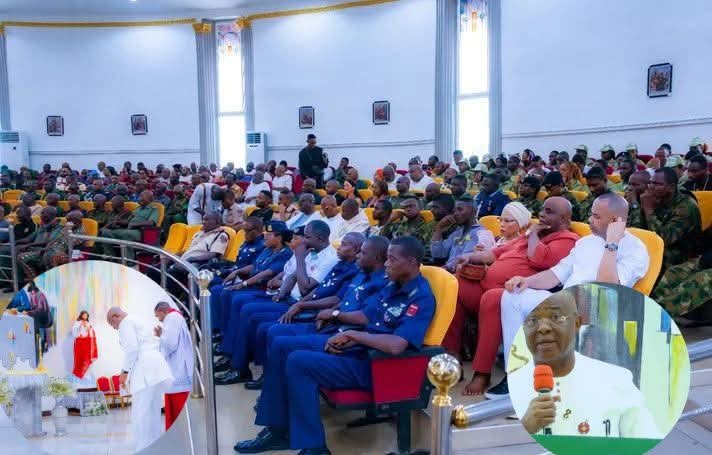
Every year on January 15, the silence that follows the laying of Wreaths across Nigeria carries more weight than Ceremony. It is a silence filled with names unspoken, futures interrupted, and families permanently altered. In Imo State, the 2026 Armed Forces Remembrance Day was marked not merely as a ritual, but as a moment of National introspection—one that forces Nigerians to confront what sacrifice truly means in a country still grappling with insecurity.
Governor Hope Uzodimma captured this gravity when he described the wreath-laying as “not merely an act of remembrance, but a profound honor bestowed on our fallen heroes.”
His words framed the day as both tribute and moral reckoning: a reminder that the Freedom, Pride, and Unity Nigerians often take for granted were secured at an immeasurable human cost.
Yet beyond the symbolism lies a harder truth. For the families of fallen soldiers, remembrance does not end when the bugle fades. As Uzodimma noted, they live with “immediate and enduring pain”—a reality that stretches long after National Flags are lowered. Widows, Orphans, and aging parents continue to bear the weight of sacrifice in quiet, often unseen ways. The question many Nigerians ask each year is whether the Nation’s Gratitude matches the scale of their loss.
As part of the 2026 commemoration, Imo State held an Interdenominational Service at the Government House Chapel, blending Faith with Statecraft. Prayers were offered for Eternal Rest for the fallen and for strength, courage, wisdom, and protection for those still in uniform. The setting underscored a growing recognition that Security in Nigeria is not just a Military issue, but a moral and spiritual one—one that demands collective responsibility from Government and Citizens alike.
Governor Uzodimma also used the occasion to align Imo State with the broader National Command Structure, feliciting President Bola Ahmed Tinubu, the Chiefs of the Armed Forces, officers, men, and their families. This gesture was symbolic but strategic, reinforcing the idea that States must stand firmly behind the Armed Forces at a time when they are stretched across multiple conflict Zones—from Counterterrorism Operations to Internal Security Challenges.
Adding a human dimension to the day, First Lady Barr. Chioma Uzodimma spoke directly to the enduring legacy of sacrifice. Her message extended beyond fallen heroes to living Veterans, whose courage, she said, continues to inspire the Nation. By highlighting both the dead and the living, her remarks subtly shifted the narrative from remembrance alone to responsibility—how Nigeria treats its Veterans, supports Military families, and honors sacrifice in practical terms.
In a country where insecurity remains a daily headline, Armed Forces Remembrance Day increasingly feels less like history and more like a mirror. It reflects not only past wars but ongoing battles, not only bravery but unresolved questions: Are fallen heroes adequately honored beyond ceremonies? Are their families sufficiently supported? And are Nigerians doing enough to preserve the unity and peace these soldiers died defending?
As wreaths were laid and prayers offered in Imo State, the deeper challenge lingered in the air. Remembrance, as many observers argue, must go beyond January 15. It must translate into sustained support for military families, better welfare for serving personnel, and a National Commitment to address the root causes of conflict.
Because if remembrance ends at ceremony, then the sacrifice risks becoming symbolic rather than transformative. But if it inspires action, accountability, and unity, then the fallen truly continue to serve—even in death.
Do you think Nigeria does enough to support the families of fallen soldiers and veterans after Armed Forces Remembrance Day? How can remembrance move beyond ceremony into real, lasting impact?